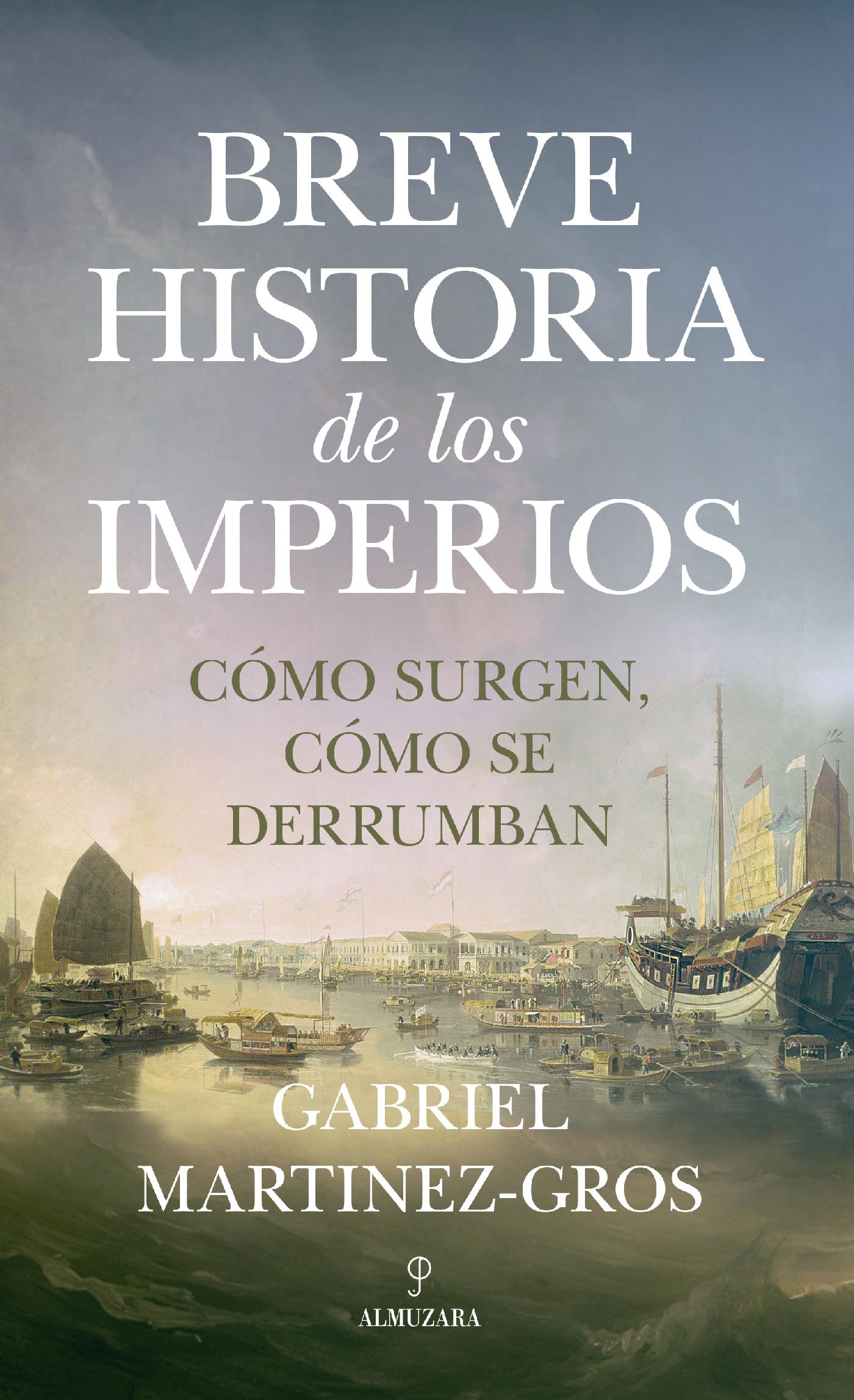
https://devlaravel.imosver.com/en/ebooks/breve-historia-de-los-imperios-E0002840388E0002840388BREVE HISTORIA DE LOS IMPERIOS5.29Con un estilo
límpido y accesible, Gabriel Martinez-Gros, reputado especialista, recorre
siglos y continentes para brindar una lectura sorprendente del ascenso y
caída de los grandes imperioshttps://www.aglutinaeditores.com/media/resources/public/b6/b669/b6691a8e988f4fa29b8d3744337b3ed2.jpgEbookEn stockALMUZARA000https://www.aglutinaeditores.com/media/resources/public/b6/b669/b6691a8e988f4fa29b8d3744337b3ed2.jpg00104104755.5750.282023/09/279788411319560GABRIEL MARTINEZ-GROSEbookaño_2023idioma_SpanishCautor_GABRIEL MARTINEZ-GROS
Artículo
BREVE HISTORIA DE LOS IMP
GABRIEL MARTINEZ-GROS
ALMUZARA
? Cookie Notice
We use cookies to ensure you get the best experience on our website.
Read cookie policy.
? Manage cookie preferences
This type of cookie allows the user to browse a website, platform, or application and to use the different options or services that exist on it.
imosver_session
Description
Essential first-party cookie. It keeps your session identified while you browse: your basket, your language and access to your account. The website cannot work without it.
Duration
120 minutes
Dependencies
Domain
imosver.com
OCT8NE
Description
This cookie is used for the proper functioning of the Oct8ne Chat to provide customer support service to the user.
These are those that enable the tracking and analysis of user behavior on our website. The information collected is used to measure user activity on the website and to create user browsing profiles.
_clsk
Description
It records statistical data about the visitor's behavior on the website. This is used for internal analysis by the website operator.
Duration
1 days
Dependencies
Domain
imosver.com
logglytrackingsession
Description
Identifies and records the user session for analytical purposes.
Duration
Session
Dependencies
Domain
.imosver.com
GOOGLE_ANALYTICS
Description
Records a unique identifier that is used to generate statistical data about how the visitor uses the website.
Duration
1 year
Dependencies
Domain
.imosver.com
_clck
Description
Microsoft Clarity first-party cookie. It stores an anonymous browser identifier so that visits to this website can be attributed to the same user and usage statistics can be produced.
Duration
1 year
Dependencies
Domain
imosver.com
CLID
Description
Microsoft Clarity third-party cookie. It identifies the first time Clarity detects this browser on any website using the service.
Duration
1 year
Dependencies
Domain
clarity.ms
_ga
Description
Google Analytics cookie. It stores an anonymous browser identifier in order to distinguish users and produce website usage statistics.
Duration
2 year
Dependencies
Domain
.imosver.com
_ga_LZR660YW0M
Description
Google Analytics 4 cookie. It keeps the analytics session state so that visits and the journey through the website can be measured.
Duration
2 year
Dependencies
Domain
.imosver.com
These are the ones that allow us to adapt the navigation on our website to your preferences (e.g., language, browser used, etc.).
_fbp
Description
Used by Facebook to offer a series of advertising products, such as real-time bids from third-party advertisers.
Duration
3 month
Dependencies
Domain
.imosver.com
afiliado
Description
First-party affiliate programme cookie. It stores for 30 days the code of the affiliate that brought you to the website, so that the sale can be attributed to them.
Duration
1 month
Dependencies
Domain
imosver.com
MUID
Description
Microsoft third-party cookie. It identifies unique browsers visiting Microsoft sites and is used for advertising, analytics and other operational purposes.
Duration
1 year
Dependencies
Domain
clarity.ms
ANONCHK
Description
Microsoft third-party cookie. It indicates whether the MUID identifier is transferred to ANID, a cookie used for advertising purposes.
Duration
10 minutes
Dependencies
Domain
clarity.ms
MR
Description
Microsoft third-party cookie. It indicates whether the MUID identifier must be refreshed.
Duration
7 days
Dependencies
Domain
clarity.ms
SM
Description
Microsoft third-party cookie. It synchronises the MUID identifier across Microsoft domains.
Duration
Session
Dependencies
Domain
clarity.ms
_fbc
Description
Meta cookie. It stores the identifier of the Facebook or Instagram advert you arrived from, in order to attribute the visit to that advertising campaign.
Duration
3 month
Dependencies
Domain
.imosver.com
_gcl_au
Description
Google Ads cookie. It records a visit coming from an advert so that advertising campaign conversions can be measured.
Duration
3 month
Dependencies
Domain
.imosver.com
_uetsid
Description
Microsoft Advertising cookie. It identifies your browsing session in order to measure conversions from Bing advertising campaigns.
Duration
1 days
Dependencies
Domain
.imosver.com
_uetvid
Description
Microsoft Advertising cookie. It identifies your browser across visits in order to measure conversions from Bing advertising campaigns.
Con un estilo
límpido y accesible, Gabriel Martinez-Gros, reputado especialista, recorre
siglos y continentes para brindar una lectura sorprendente del ascenso y
caída de los grandes imperios, desde Roma a China, incluido el islam, los
mongoles y la India de los mogoles. Esta lectura atrevida está inspirada en
el pensamiento de Ibn Jaldún. Este pensamiento, de alcance similar al de Marx
o Tocqueville, uno de los pocos que no nació en Occidente, es la clave de
bóveda de este texto que nos conduce a un apasionante viaje por la historia
de las épocas imperiales y también señala todo lo que nuestro mundo
democrático, nacido de la revolución industrial, tiene de excepcional, y
quizá de efímero. Ibn Jaldún
(1332-1406) “concibió y formuló una filosofía de la historia que posiblemente
sea la obra más grande que jamás haya sido creada por una mente en cualquier
momento y en cualquier país”. (Arnold Toynbee). Este historiador tunecino
descubrió mecanismos sociales que se aplican a todas las civilizaciones. ¿Por
qué sus ideas son ignoradas fuera de un pequeño círculo de especialistas? Sin
duda porque perturban a muchos gobernantes. Los imperios nacen cuando se
forma una bolsa de prosperidad. Una población que se desarrolla atrae la
codicia de los bárbaros que la rodean. Los productores y comerciantes no
pueden competir militarmente con guerreros. Por tanto, son invadidos y
sometidos. El guerrero adopta los modales más refinados de los conquistados e
impone su organización social. Entonces puede confiar en la riqueza adquirida
para fortalecerse, expandir sus conquistas y, salvo accidente, terminar
creando un imperio. Los ejércitos deben crecer para ocupar territorios cada
vez más extensos mientras la población de la capital se multiplica por la
absorción de las élites" de los pueblos conquistados. El imperio se hace
más rico, pero sus costes aumentan aún más rápido. El conjunto se derrumba
bajo la presión externa cuando se debe reducir el gasto militar o bajo presión
interna si se reduce el gasto social.
Gabriel Martinez-Gros analiza la historia de los imperios desde un
prisma novedoso y lúcido. La evolución de las comunicaciones ha reducido los
fenómenos imperiales que antaño duraron un siglo a unas pocas décadas, pero
sus patrones de desarrollo siguen siendo casi idénticos."